Parapet flashing
The membrane runs up the wall and tucks under the coping.
Concrete flat roof material, installed by Flat Roofers NY, is a fully adhered waterproofing membrane bonded straight to your concrete roof deck. We put it down on Queens buildings every week.
Want the slab checked first? The estimate is free.
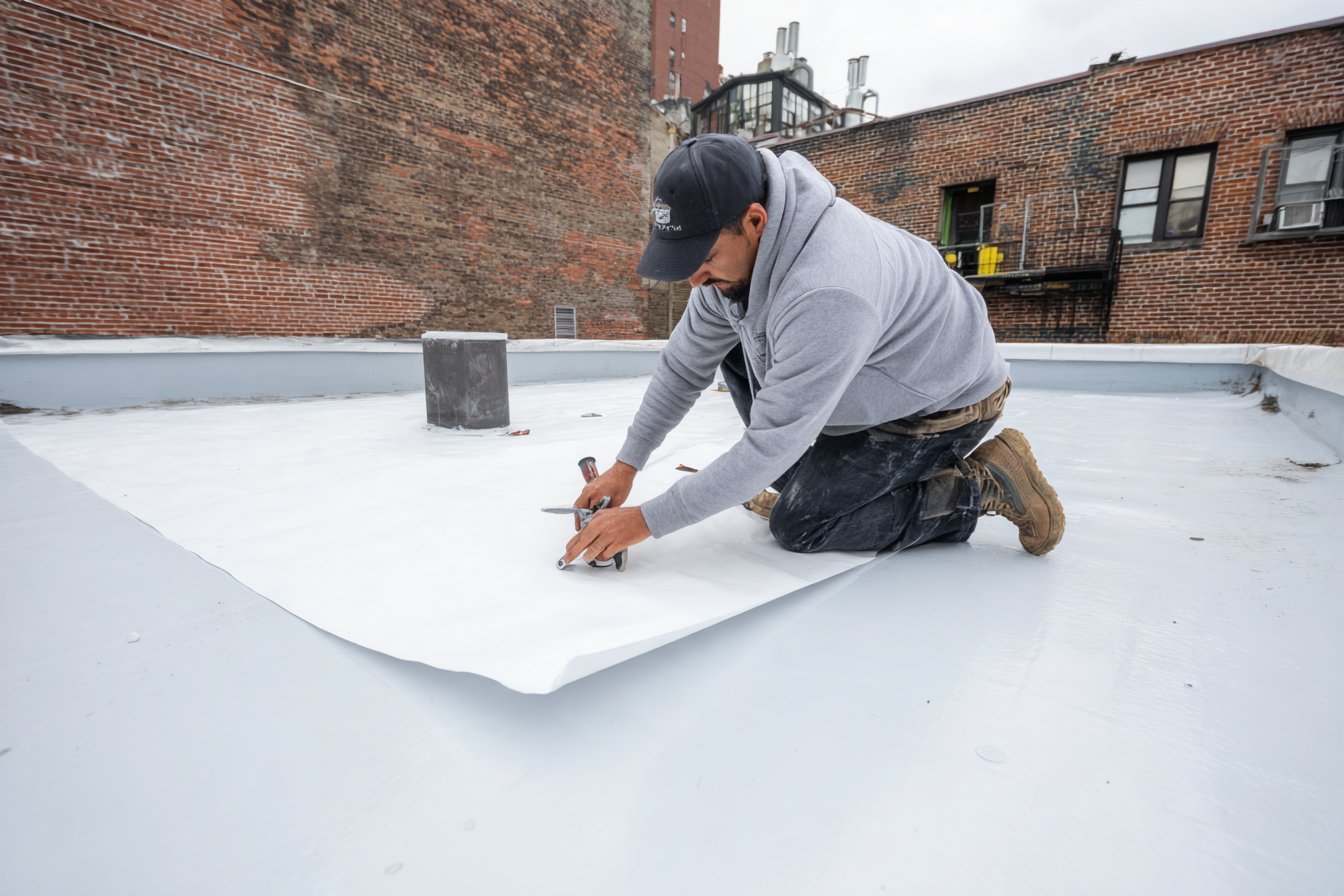
Four systems bond well to a slab. Here's how they compare.
| System | Our usual pick Modified bitumenTorch-down | TPOSingle-ply sheet | EPDMRubber sheet | Liquid-appliedPolyurethane or elastomeric |
|---|---|---|---|---|
| How it bonds | Asphalt primer, then torched on | Primed deck, bonding adhesive | Bonding adhesive over cover board | Primer, then cures onto the surface |
| How long it lasts | 20 to 25years | 20 to 30years | 25 to 30years | 10 to 20years, recoatable |
| Suits best | Pavers and terraces | Big open roofs | Ponding-prone decks | Foot traffic, crowded decks |
Cementitious waterproofing under roof pavers is a fifth route. Got torch-down that's mostly sound? Patching the bitumen layer you already have can beat a tear-off.
No membrane outlasts the concrete under it.
So we fix the deck first.
Calls for tapered insulation and drain repair. See how we clear standing water before the new roof goes on.
Routed out, filled and sealed so they don't show through.
Spall repair comes before any membrane. Loose concrete out, rebar cleaned and coated, then patched.
We run a moisture survey. Water already dripping inside? Then the leak gets stopped first.
First day on the roof, we grind and sweep the deck clean. Then we prime it so the adhesive grabs the concrete. After that the system goes on in order:
Leaks start at edges and openings. That's where we slow down.
The membrane runs up the wall and tucks under the coping.
Sealed into the drain bowl under a new clamping ring.
Lined in metal, then stripped in with extra plies.
A raised curb with a flexible cover that moves with the building.
Concrete isn't waterproof. Rain soaks in, freezes and cracks the slab. Once water reaches the rebar, the steel rusts, swells and pops chunks off.
Put a membrane on top and that cycle stops. Your top floor stays dry. The slab stays dry too, and the roof can last decades longer.
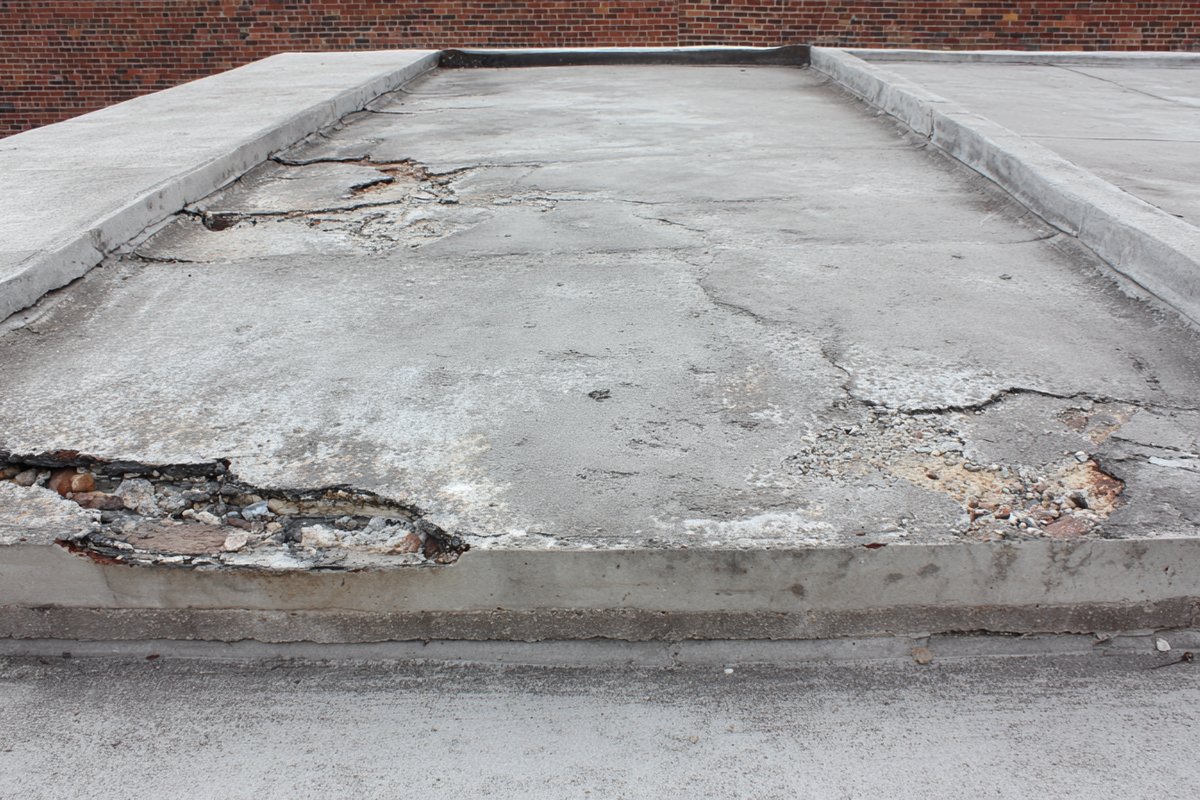
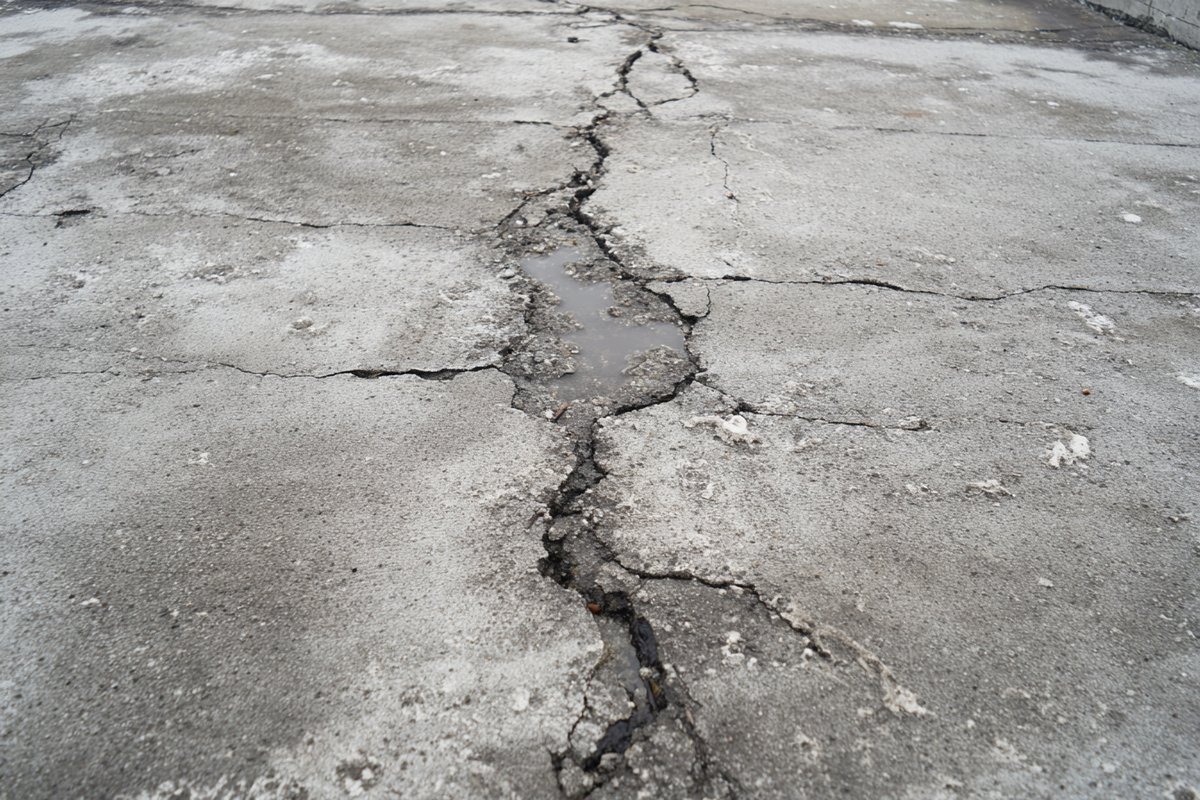
Apartment buildings, co-ops and condos, mixed-use buildings, attached houses, commercial buildings, churches and warehouses. Parking decks get a traffic-grade deck coating built for tires.
Our crew works out of Elmhurst and covers the Queens neighborhoods on our route.
The free estimate starts on your roof, with a look at the slab's condition. Then we tell you which concrete flat roof material fits and what it'll cost.